 |
|
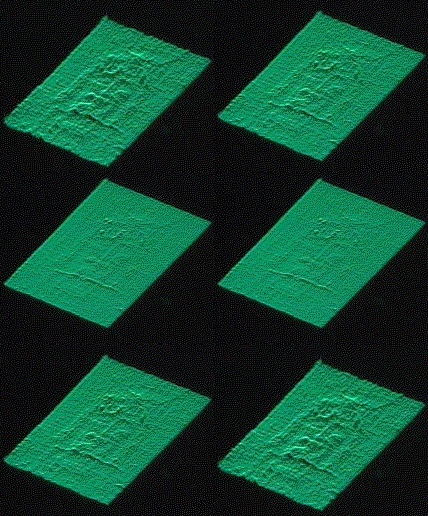
Designed in the 1970's for evaluating x-rays and for other imaging purposes, the VP-8 Image Analyzer is an analog device that converts image density (lights and darks) into vertical relief (shadows and highlights). When applied to normal photographs, the result was a distorted and inaccurate image. However, when it was applied to the Shroud, the result was an accurate, topographic image showing the correct, natural relief characteristics of a human form. These results are often referred to as "three-dimensional."
In 1976, a group of scientists who were using a VP-8 at Sandia Laboratories to evaluate x-rays, put a 1931 Enrie photograph of the Shroud of Turin into the device and were able to visualize the three-dimensional properties that exist in the Shroud image. This particularly intrigued two of the researchers present at the test, Dr. Eric Jumper and Dr. John Jackson. Stimulated by their startling discovery, they decided to form a research team to investigate what might have formed the image on the cloth and within a few months, the Shroud of Turin Research Project (STURP) was born. Two years later, that same team would perform the first ever, in-depth scientific examination of the Shroud of Turin.
When input to a VP-8, a normal photograph does not result in a properly formed dimensional image but in a rather distorted jumble of light and dark "shapes." That is because the lights and darks of a normal photograph result solely from the amount of light reflected by the subject onto the film. The image densities do not depend on the distance the subject was from the film. Yet the image on the Shroud of Turin yields a very accurate dimensional relief of a human form. One must conclude from this that the image density on the cloth is directly proportionate to the distance it was from the body it covered. In essence, the closer the cloth was to the body (tip of nose, cheekbone, etc.), the darker the image, and the further away (eye sockets, neck, etc.), the fainter the image. This spatial data encoded into the image actually eliminates photography and painting as the possible mechanism for its creation and allows us to conclude that the image was formed while the cloth was draped over an actual human body. So the VP-8 Image Analyzer not only revealed a very important characteristic of the Shroud image, but historically it also provided the actual motivation to form the team that would ultimately go and investigate it. Interestingly, only sixty VP-8 Image Analyzers were ever constructed and only two remain functional today.
On May 1, 1997, I was fortunate to spend some time in North Carolina with my friend Kevin Moran, retired Senior Technology Specialist from Eastman Kodak's Estek Products Division and a Shroud researcher since 1978. Kevin owns one of the two functioning original VP-8 units and was kind enough to welcome me into his home and spend the next 14 straight hours working with me to videotape "new" VP-8 images. Actually, the real thanks should go to his dear wife Anne, who put up with the two of us working until 4:00am!
To maximize the quality of the somewhat dated and temperamental imaging system, I replaced the existing camera and lens with a new high resolution CCD camera and lens and used first generation black & white prints made directly from my original 4x5" negatives as source images. I recorded the results off the VP-8's green screen monitor using a Sony BetaCam SP system. The image at the top of this page is a frame taken from the videotape we made during that "all-nighter". The Animated Gif file below shows only a brief sample of the VP-8 "Gain" control being applied to the Shroud facial area.
 |
The photographs we used in the VP-8 were black & white prints of the Shroud as it appears to the eye, much like the images in the "Mapping of Research Test Points" paper found on the "Scientific Papers & Articles" page of this website. This article was originally written in 1997 and updated March 30, 2014.